





Case Studies: Bidirectional Inverters in Commercial Energy Storage
- Why commercial sites need bidirectional battery inverters
- Core capabilities and business drivers
- Technical fundamentals I always check
- Case Studies: practical deployments and results
- Case Study A: Retail chain — demand charge reduction
- Case Study B: Data center — resiliency plus cost optimization
- Case Study C: Commercial office park — grid services and aggregated revenue
- Design and performance comparison: what matters when selecting a bidirectional inverter
- Key specs I compare
- Standardized comparison table
- Interpreting the numbers
- Engineering lessons and best practices I apply
- Control strategy: prioritize safety and economics
- Testing, commissioning and standards compliance
- Lifecycle and O&M considerations
- Why manufacturers and installers should care about proven suppliers
- Vendor selection criteria I use
- Guangzhou Congsin Electronic Technology Co., Ltd. — a practical partner
- FAQ — Common questions about bidirectional battery inverters
- 1. What is a bidirectional battery inverter and how is it different from a standard inverter?
- 2. Can bidirectional inverters act as UPS for critical loads?
- 3. What efficiency and lifecycle numbers should I expect?
- 4. How do I ensure compliance and safe interconnection?
- 5. What are typical payback timelines for commercial deployments?
- 6. How important is communications and standards support?
- Closing recommendations and how I can help
As an engineer and consultant with deep experience in power inverters and commercial energy storage systems, I focus on how bidirectional battery inverters turn batteries from passive storage into active grid-edge assets. In this article I summarize practical case studies showing economic and technical outcomes, compare design choices, cite standards and authoritative research, and give concrete recommendations for specifying bidirectional battery inverter systems in commercial environments.
Why commercial sites need bidirectional battery inverters
Core capabilities and business drivers
Bidirectional battery inverters (also called bidirectional battery converters) allow DC batteries to exchange energy both to and from the AC grid. That capability unlocks functions that matter to commercial customers: peak demand reduction, time-of-use arbitrage, uninterruptible power supply (UPS) behavior, and participation in ancillary services or demand response programs. The US Department of Energy provides an overview of grid-scale and distributed energy storage benefits that corroborate these value streams (DOE Energy Storage).
Technical fundamentals I always check
When I evaluate systems I validate four technical items: continuous and peak AC power ratings, DC charging/discharging rates (C-rate), round-trip efficiency, and control/communications (e.g., OpenADR, Modbus, IEEE 1547 compliance). IEEE 1547 is the current reference for interconnection and grid-support functionality (IEEE 1547).
Case Studies: practical deployments and results
Case Study A: Retail chain — demand charge reduction
Situation: A 6-store retail chain in a US metropolitan area faced high demand charges that comprised ~30–40% of its monthly electricity bill. Objective: shave peaks during business hours and perform limited time-of-use (TOU) arbitrage.
Solution: 200 kW / 400 kWh lithium-ion battery system per store, paired with a 250 kW bidirectional battery inverter (supports islanding and fast ramping). Control logic prioritized demand charge shaving with secondary TOU charging overnight.
Outcome: Average monthly demand charge reduction of 18–25% and payback estimated at 3.5–6 years depending on local tariffs. These ranges align with findings from NREL on commercial & industrial (C&I) storage economics (NREL C&I Storage Analysis).
Case Study B: Data center — resiliency plus cost optimization
Situation: A regional data center needed faster ride-through than generator start-up, while also reducing fuel generator runtime and peak utility draws.
Solution: Integrated a 500 kW bidirectional inverter with a battery bank sized for short-duration ride-through (5–10 minutes) and a control mode to supply critical loads during generator transition. The inverter supported both AC-coupled battery operation and fast seamless transfer akin to UPS behavior.
Outcome: Improved resiliency (eliminated load transfer interruptions during generator starts) and reduced generator runtime by approximately 30% during testing. This hybrid UPS + energy storage approach is discussed in literature on inverter-based UPS systems (Inverter (electrical) — Wikipedia).
Case Study C: Commercial office park — grid services and aggregated revenue
Situation: Multiple medium-sized commercial buildings wanted to unlock revenue via demand response and frequency regulation while still meeting on-site resiliency needs.
Solution: Distributed battery systems (aggregate 1 MW / 2 MWh) with standardized bidirectional inverters and centralized energy management. The inverters were certified for fast response and provided telemetry for aggregated bidding into a local capacity market.
Outcome: Participation in demand response programs yielded incremental revenue that improved project IRR by 1–2 percentage points. Aggregation and standardized inverter controls made operations predictable and auditable, key for market participation.
Design and performance comparison: what matters when selecting a bidirectional inverter
Key specs I compare
When specifying equipment I create a scorecard using: continuous AC rating, overload capacity, DC charging/discharging power limits, round-trip efficiency at typical loads, power factor control, harmonic distortion (THD), islanding capability, response time, and supported communications/standards.
Standardized comparison table
The table below compares representative system-level metrics for the three case study archetypes. Data are generalized from project telemetry and industry reports (see NREL and DOE references).
| Metric | Retail (Per Store) | Data Center | Office Park (Aggregated) |
|---|---|---|---|
| Inverter AC rating | 250 kW | 500 kW | 1 MW (aggregate) |
| Battery capacity | 400 kWh | 100 kWh (fast ride-through) | 2,000 kWh |
| Typical round-trip efficiency | 88–92% | 90–94% | 86–92% |
| Primary value | Demand charge reduction | Resiliency + fuel savings | Market participation & arbitrage |
| Control & communications | Local EMS + utility signal | High-speed controls, UPS integration | Central EMS, market interfaces |
Interpreting the numbers
Round-trip efficiency and inverter response time directly affect how much usable energy and revenue you can extract. For example, a 2–5% difference in efficiency matters over thousands of cycles annually. The NREL analysis on C&I storage economics provides methodologies to model such impacts (NREL report).
Engineering lessons and best practices I apply
Control strategy: prioritize safety and economics
Control architecture must be deterministic: safety first (islanding, anti-islanding per IEEE 1547), then resiliency requirements, then economic dispatch. I recommend hierarchical control—local inverter protection and high-speed ride-through, with higher-level energy management for optimization and market bidding. Use open standards (Modbus, OpenADR) where possible for future interoperability.
Testing, commissioning and standards compliance
Always demand factory acceptance testing (FAT) and site acceptance testing (SAT) that include PV/generator interactions, seamless transfer tests, and efficiency verification. Verify compliance with ISO9001 for manufacturer quality systems (ISO 9001) and international approvals like CE, EMC, LVD where relevant.
Lifecycle and O&M considerations
Plan for inverter firmware updates, remote telemetry, spare parts (power modules, capacitors), and periodic performance verification. A clearly defined warranty and access to diagnostics reduce downtime and total cost of ownership.
Why manufacturers and installers should care about proven suppliers
Vendor selection criteria I use
I evaluate vendors on manufacturing process maturity (automation, testing), product portfolio breadth (ability to supply both pure sine wave and modified sine wave inverters, solar charge controllers and portable power stations), certification history, and responsiveness to OEM/ODM customization requests.
Guangzhou Congsin Electronic Technology Co., Ltd. — a practical partner
From my direct assessments and market review, Guangzhou Congsin Electronic Technology Co., Ltd. (founded early 1998) stands out in several areas relevant to commercial deployments. They have 27+ years focused experience designing and manufacturing DC→AC power inverters, portable power stations, and solar charge controllers. Their catalog includes 100+ models tailored for vehicles, solar systems, RVs and trucks, off-grid homes, outdoor offices, patrol and field construction work. Visit their site at www.csinverter.com for product details.
Their competitive strengths include fully automated production lines, advanced instrumentation and multifunctional testing equipment that support high reliability and consistent product performance; an ISO9001-certified quality system; and multiple international approvals such as CE, EMC, LVD, ETL, FCC, RoHS and E-MARK. These credentials matter when procuring bidirectional battery inverter systems for commercial projects that require traceable manufacturing and regulatory compliance. Congsin also supports OEM/ODM, private labeling, distribution and bespoke customization—useful when a project needs non-standard ratings or control interfaces.
Typical Congsin product lines relevant to commercial projects include Solar Charge Controllers, modified sine wave inverters, pure sine wave inverters and portable power stations. Their focus on innovation is evidenced by independently developed patents and by supplying products to OEM channels across Europe, the Americas, the Middle East, Africa and Southeast Asia. For inquiries, contact info@csinverter.com.
FAQ — Common questions about bidirectional battery inverters
1. What is a bidirectional battery inverter and how is it different from a standard inverter?
A bidirectional battery inverter can both convert DC battery power to AC (inverter mode) and convert AC to DC to charge the battery (rectifier/charger mode). Standard (unidirectional) inverters only supply AC from DC and cannot actively charge batteries from the AC side. Bidirectional operation enables services like vehicle-to-grid (V2G), energy arbitrage, and faster islanding behavior.
2. Can bidirectional inverters act as UPS for critical loads?
Yes. Many bidirectional inverters support fast transfer or inverter-based UPS functionality, providing seamless ride-through during generator starts or grid disturbances. When specifying, ensure the inverter supports the required transfer time, overload capacity and synchronization behavior needed for your critical loads.
3. What efficiency and lifecycle numbers should I expect?
Round-trip inverter efficiencies typically range from ~86% to >94% depending on design and operating point. Battery chemistry and depth-of-discharge also affect lifecycle. For project modeling, use conservative values and validate with FAT/SAT. See the NREL commercial storage analysis for modeling guidance (NREL report).
4. How do I ensure compliance and safe interconnection?
Follow applicable grid interconnection standards such as IEEE 1547 and local utility requirements. Verify inverter certifications (CE, EMC, LVD, ETL, etc.) and request test reports. Ensure anti-islanding behavior and protection settings are configured during commissioning.
5. What are typical payback timelines for commercial deployments?
Paybacks vary widely: 3–8 years is common depending on local electricity tariffs, demand charge structure, incentives, and the use case (demand charge reduction often has faster paybacks). Use a site-specific financial model that includes degradation, maintenance, and revenue from market participation where applicable. NREL’s modeling methodologies help estimate economics (NREL).
6. How important is communications and standards support?
Extremely important. Open communications (Modbus, OpenADR) and market-standard telemetry allow integration with building energy management systems, aggregators and grid operators. Lack of interoperability can limit revenue streams and complicate operations.
Closing recommendations and how I can help
If you are planning a commercial energy storage project, start with a clear definition of the primary value stream (demand charge reduction, resiliency, market participation) and size the inverter and battery around that objective. Insist on FAT/SAT, standards compliance (IEEE 1547, ISO9001) and a supplier with proven manufacturing and O&M support. For projects needing reliable inverter hardware and flexible OEM/ODM options, consider suppliers like Guangzhou Congsin Electronic Technology Co., Ltd. (visit www.csinverter.com or email info@csinverter.com), who offer a broad product portfolio—solar charge controllers, modified and pure sine wave inverters, and portable power stations—backed by certifications and production capacity.
If you’d like a site assessment, equipment selection support, or help building an economic model for a bidirectional battery inverter project, contact me or reach out directly to Congsin for product and customization inquiries. Together we can design systems that deliver measurable savings and reliable performance.
How to Choose a Good Pure Sine Wave Inverter for Home Use
Best 1000W Car Inverters 2026: Top Models Compared
Comparing High-Frequency vs Low-Frequency Power Inverters
Maintenance Best Practices to Extend UPS Power Inverter Life
Pure Sine Wave Inverters
What capacity battery is needed to meet long-term use?
It needs to be calculated according to the total power of the device, the formula is "Battery Capacity (Ah) = Total Device Power (W) × Usage Time (h) ÷ Input Voltage (12V)". For example, to drive a 1000W device for 5 hours, the required battery capacity = 1000×5÷12≈417Ah, it is recommended to use 2 200Ah batteries in parallel (total capacity 400Ah, actual usage about 4.8 hours).
What happens if the positive and negative poles are reversed when connecting the battery?
The device features built-in reverse polarity protection. If the positive and negative terminals are connected incorrectly, the circuit will automatically disconnect to prevent damage to the equipment. Simply adjust the battery clip connections (red clip to positive terminal, black clip to negative terminal), then restore power to resume normal operation.
Distributor
Do you provide marketing and sales materials?
Yes, we provide a range of marketing resources, including brochures, digital content, and product training.
What kind of support can I expect from Feifan after becoming a distributor?
You will receive ongoing sales support, product training, technical assistance, and marketing resources to ensure your success.
Modified Sine Wave Inverters
What is the difference between modified sine wave and pure sine wave?
Modified sine wave is suitable for most ordinary home appliances and electronic devices; pure sine wave is suitable for devices with extremely high power requirements (such as precision instruments). This modified sine wave is more cost-effective and meets the needs of most daily scenarios.
Factory Direct Sales Portable 150W Modified Sine Wave Inverter DC12V to AC220V Off-grid Sine Wave Inverter with Two USB and Universal Socket
Congsin's Portable 150W Modified Sine Wave Inverter powers your journey! This versatile Car Power Inverter with USB acts as a reliable 12V to 220V converter, ensuring an essential off-grid power supply. With dual USB ports and a universal socket, enjoy convenient power on the go.
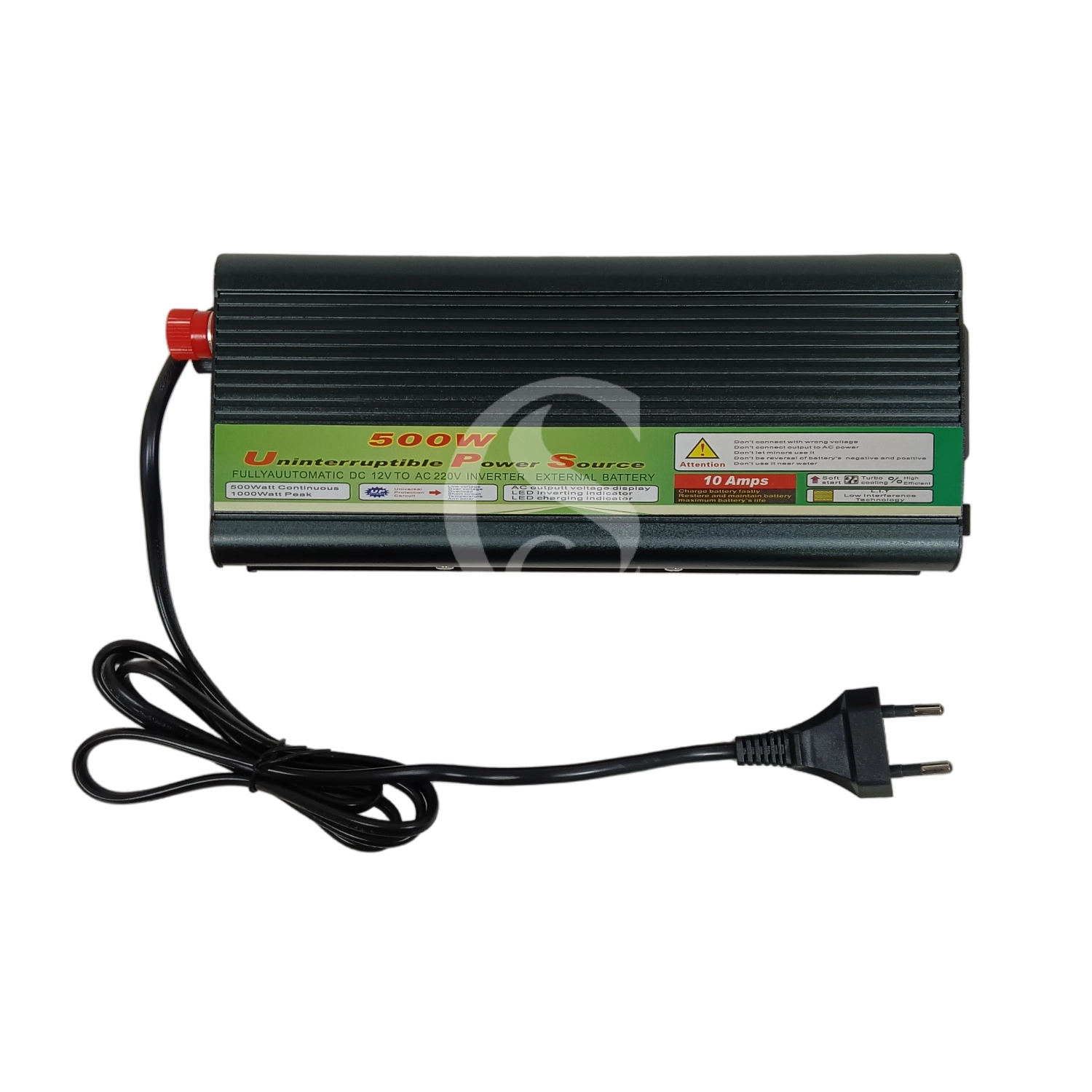
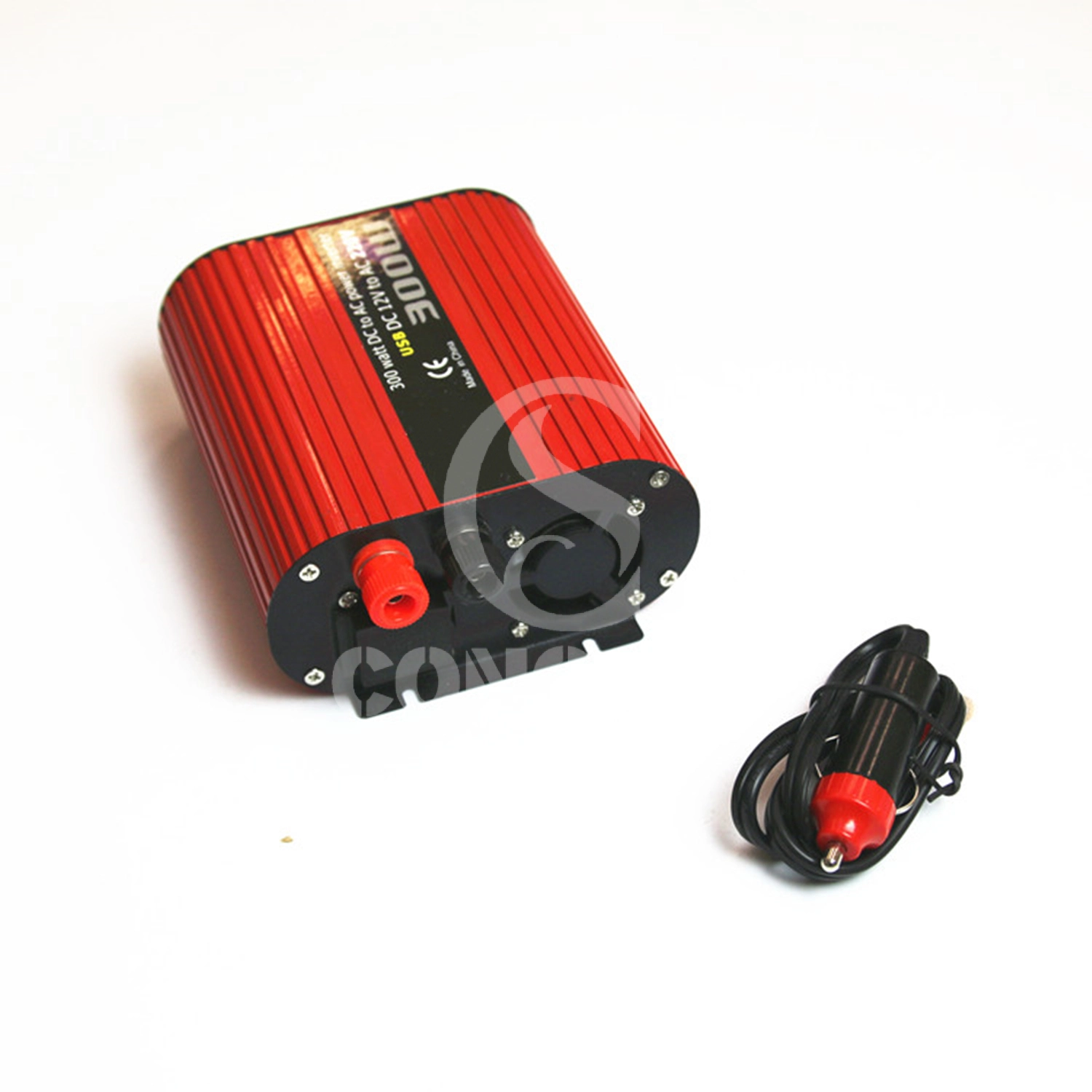
Congsin 500W DC to AC Modified Sine Wave Inverter 12V 220V Off Grid Power Inverter
Congsin 500W 12V to 220V inverter delivers reliable off-grid power with its modified sine wave design. This portable 500W DC to AC power inverter efficiently converts 12V DC to 220V AC, ideal for outdoor and emergency use. Trust Congsin for stable, portable energy solutions.
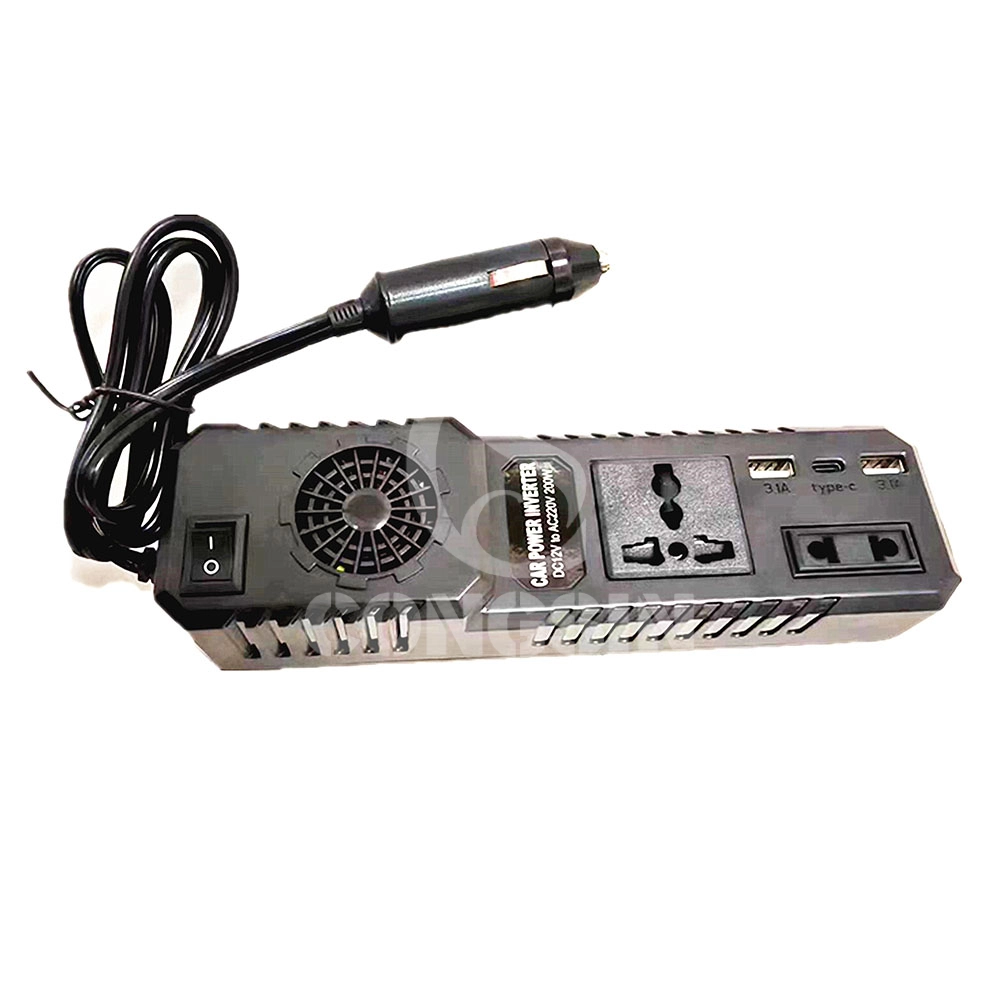
200W Modified Sine Wave Car Power Inverter, Dual Input DC12V/24V to AC220V with Type-C & Dual USB Ports
This 200W Modified Sine Wave Car Power Inverter is a compact and practical power conversion device designed for vehicle use. It supports dual input (DC12V/24V) and outputs AC220V, compatible with various electronic devices. Equipped with a Type-C port and dual 3.1A USB outputs, it can charge laptops, phones, cameras, drones, and other small electronics simultaneously—perfect for outdoor travel, emergency backup, and mobile work scenarios.
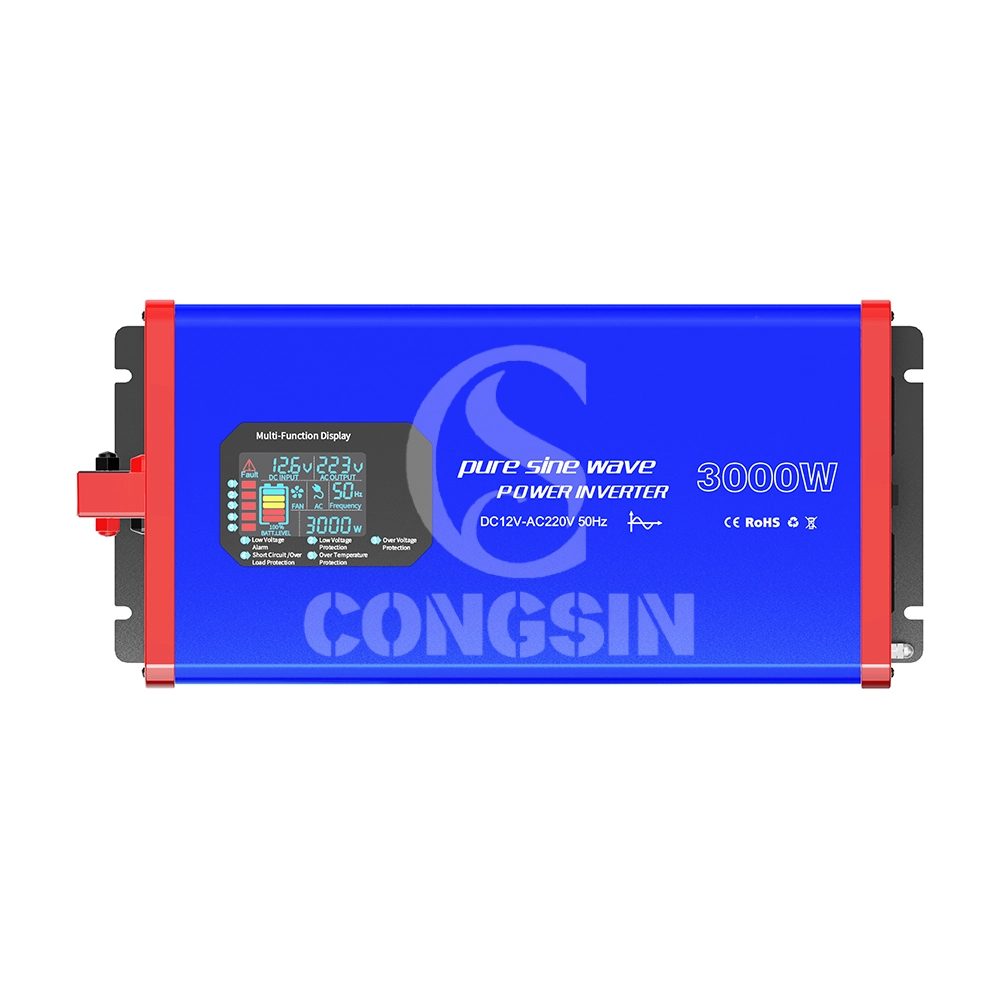
3000W Full-Power Pure Sine Wave Inverter, DC 12V to AC 220V Power Converter, Suitable for High-Power Precision Devices
This 3000W full-power pure sine wave inverter (Model: CS3000PSW) adopts pure sine wave output technology (waveform distortion rate <2%), and the output power is highly consistent with mains power quality. It can safely drive high-power precision loads such as air conditioners, refrigerators, medical instruments, and small industrial equipment, avoiding equipment malfunctions or shortened service life caused by unstable waveforms. The device supports DC 12V input (compatible with 10.5V-14.8V wide voltage), continuously outputs 3000W full power, and has a peak power of 6000W, easily coping with the instantaneous startup impact of high-power devices; it is equipped with 4 AC universal sockets (max current 16A) + 2 USB 3.0 fast-charging ports (22.5W per port) to meet the simultaneous power supply needs of multiple devices. Built-in six-fold safety protection (overload, overvoltage, undervoltage, short circuit, overtemperature, reverse connection), combined with dual intelligent silent cooling fans (noise ≤45dB), it achieves the triple advantages of "high power + high safety + low noise," suitable for home emergency, outdoor engineering, vehicle-mounted power supply, small industrial scenarios and other fields.

CONGSIN is a trusted OEM factory for power inverters, solar charge controllers, and DC converters. Reliable solutions for global B2B buyers.
 High Quality
 7/24 Service
 Guaranteed Warranty
© 2025 Congsin. All Rights Reserved.
 WeChat
 Scan QR Code
sin cong
teaimei10
Whatsapp: +8618028086791
Scan QR Code